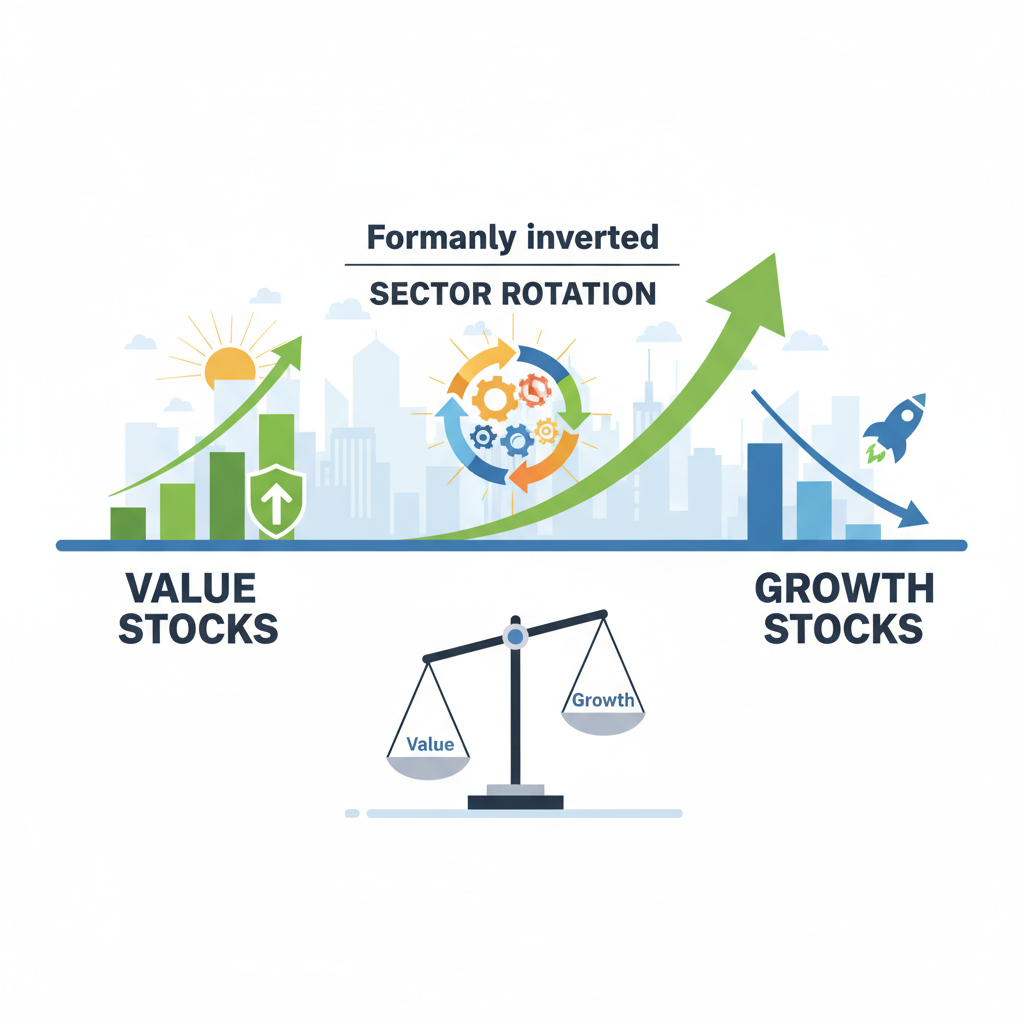
Yield curve no longer inverted: Can value stocks outperform growth again? | Value Stocks,Growth Stocks,Yield Curve,Sector Rotation
For months, investors have been navigating a tricky economic landscape, constantly bombarded with news about inflation, interest rates, and the potential for a recession. One key indicator that has been closely watched is the yield curve. And now, things are changing. The yield curve is no longer inverted, prompting questions about whether this shift signals a new era for investment strategies. Specifically, many are wondering if this is a signal for **value stocks** to finally outperform **growth stocks**.
Understanding the Yield Curve
The yield curve represents the difference in yields between short-term and long-term U.S. Treasury bonds. Typically, the yield curve slopes upward, meaning that longer-term bonds offer higher yields than shorter-term ones. This is because investors generally demand a premium for tying up their money for a longer period, compensating them for the risk of inflation and other uncertainties over time.
However, an inverted yield curve occurs when short-term Treasury yields exceed long-term yields. Historically, this phenomenon has been a fairly reliable predictor of economic recessions. The underlying logic is that when investors are pessimistic about the future, they tend to flock to the safety of long-term bonds, driving their prices up and their yields down. This, in turn, inverts the relationship between short-term and long-term yields.
The Inversion is Over: What Does it Mean?
Recently, the yield curve has un-inverted, meaning the spread between short and long-term Treasury yields is no longer negative. While some might breathe a sigh of relief, experts caution against drawing immediate conclusions. The un-inversion could signify a few different things:
- The economy is strengthening: This is the optimistic view. Perhaps inflationary pressures are easing, and the Federal Reserve’s interest rate hikes are starting to take effect without pushing the economy into a severe downturn.
- A recession is already priced in: It’s possible that the market has already factored in a mild recession, and the yield curve is simply reflecting that expectation.
- The Fed Pivot: Anticipation of the Federal Reserve cutting interest rates in the near future could be steepening the curve.
Regardless of the exact reason, the change in the yield curve’s shape has significant implications for investment strategies. One area of particular interest is the potential impact on **sector rotation**, specifically the relative performance of value versus growth stocks.
Value vs. Growth: A Timeless Debate
Value and growth stocks represent two fundamentally different investment philosophies.
Value Stocks
**Value stocks** are typically companies that are considered undervalued by the market. These companies often have solid fundamentals, such as strong balance sheets and consistent earnings, but trade at lower prices relative to their earnings, book value, or other metrics compared to their peers. Value investors seek to identify these companies and profit when the market recognizes their true worth.
Growth Stocks
**Growth stocks**, on the other hand, are companies that are expected to grow their earnings at a faster rate than the average company in the market. These companies often operate in rapidly expanding industries or have innovative products or services that give them a competitive edge. Growth investors are willing to pay a premium for these stocks, betting that their rapid growth will justify the higher valuation.
The performance of value and growth stocks tends to be cyclical, often influenced by the prevailing economic environment and interest rate policies.
Yield Curve and Sector Rotation: A Potential Shift to Value?
So, how does the yield curve relate to the potential outperformance of value stocks? Traditionally, value stocks tend to perform better in rising interest rate environments, while growth stocks often thrive when rates are low or falling. This is because:
- Discount Rates: Growth stocks’ valuations are heavily dependent on future earnings, which are discounted back to the present. Higher interest rates increase the discount rate, making those future earnings less valuable today and potentially weighing on growth stock valuations. Value stocks, with their current earnings focus, are less sensitive to changes in interest rates.
- Economic Growth: Value stocks are often found in sectors like financials, materials, and industrials, which tend to benefit from stronger economic growth. A steeper yield curve can indicate expectations for improved economic activity, potentially boosting these sectors and the **value stocks** within them.
Therefore, the un-inversion of the yield curve, especially if it’s driven by expectations of stronger economic growth or a more stable interest rate environment, could create a more favorable backdrop for value stocks to outperform **growth stocks**. However, it’s crucial to remember that this is just one factor among many that influence market performance.
Navigating the Current Landscape
The recent shift in the yield curve, while potentially significant, should not be viewed in isolation. Investors should consider a range of factors when making investment decisions, including:
- Inflation: The path of inflation remains a crucial determinant of market performance. If inflation remains stubbornly high, the Federal Reserve may need to maintain its hawkish stance, which could create headwinds for both value and growth stocks.
- Economic Growth: The strength of the overall economy is another critical factor. A significant economic slowdown could negatively impact corporate earnings and offset any potential benefits from a steeper yield curve.
- Company-Specific Factors: Ultimately, the success of individual stocks depends on their specific fundamentals and competitive advantages. Thorough research and due diligence are essential.
The debate between **value stocks** and **growth stocks** is likely to continue, with both investment styles having periods of outperformance. Successfully navigating the current market requires a balanced approach, considering both macroeconomic trends and individual company characteristics.
Conclusion
The un-inversion of the yield curve presents an interesting dynamic in the current market. While it might signal a potential opportunity for value stocks to regain their footing and even outperform growth stocks, it’s not a definitive sign. The economic outlook remains uncertain, and a comprehensive analysis that includes inflation data, economic growth indicators, and company-specific research is vital for making informed investment decisions. This **sector rotation** could offer new opportunities, but careful consideration and strategic planning are key.
Ready to dive deeper into value investing and potentially capitalize on this market shift? Explore our in-depth resources and expert analysis to help you build a well-rounded portfolio. Sign up for our newsletter today to stay informed!