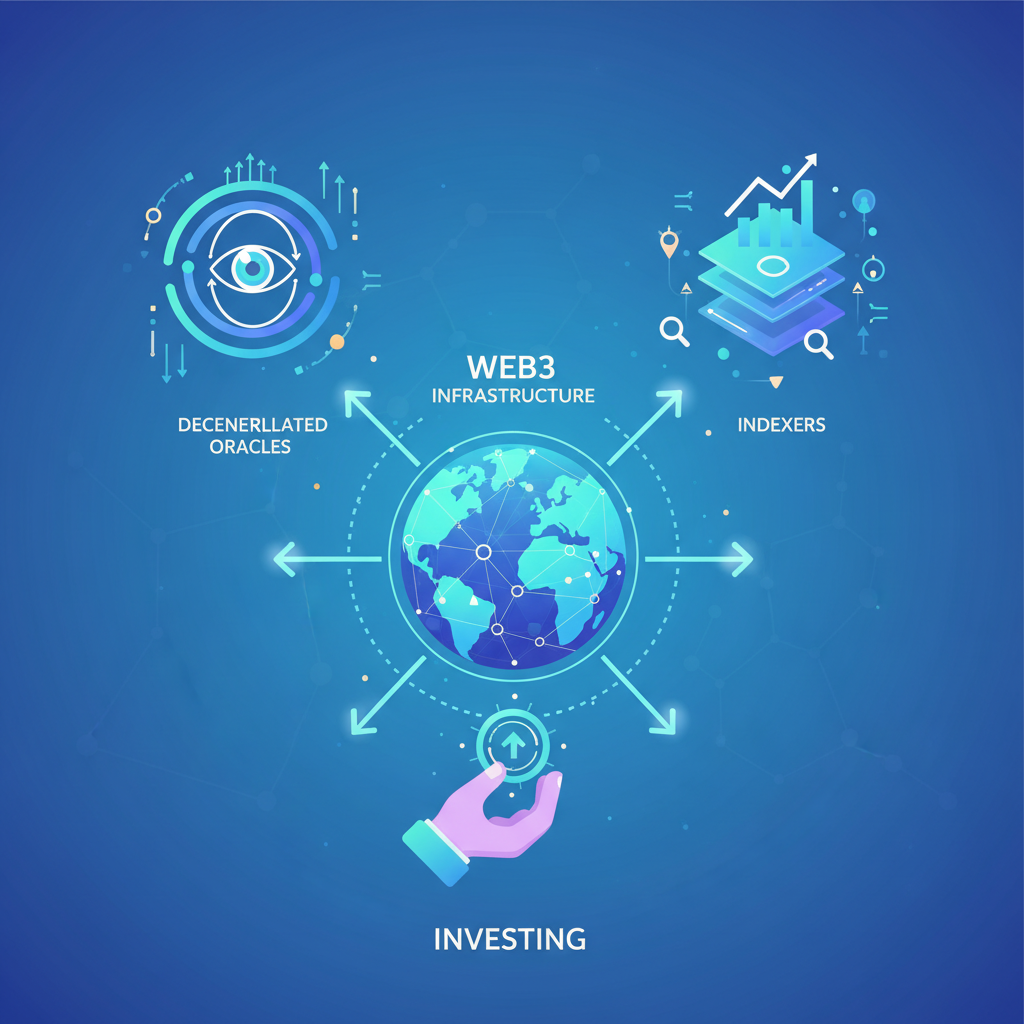
Web3 Infrastructure: Investing in Decentralized Oracles and Indexers
Web3, the vision of a decentralized internet, is gaining traction, but its realization hinges on robust and reliable infrastructure. While much attention is given to Layer-1 blockchains like Ethereum and Solana, crucial components like decentralized oracles and indexers often fly under the radar. This news observation examines the growing importance of these foundational elements and the increasing investment they are attracting.
The Unsung Heroes of Web3: Oracles and Indexers
Imagine a world where financial transactions, supply chains, and even social media are built on decentralized platforms. This is the promise of Web3. But for this promise to materialize, these platforms need access to accurate, real-world data and efficient ways to organize and retrieve on-chain information. This is where decentralized oracles and decentralized indexers step in.
Traditionally, Web2 applications rely on centralized APIs to access external data. In Web3, relying on centralized providers introduces single points of failure and potential censorship. Decentralized oracles bridge the gap between blockchains and the real world in a trustless manner, providing verifiable data feeds that smart contracts can rely on.
Similarly, blockchains store data in a way optimized for security and immutability, not for efficient querying. Decentralized indexers organize and make blockchain data readily available for applications, providing a crucial service for developers building anything from DeFi dashboards to NFT marketplaces. Without efficient indexing, accessing and displaying blockchain data would be incredibly slow and resource-intensive, hindering user experience and limiting the potential of dApps (decentralized applications).
Decentralized Oracles: Bringing Real-World Data On-Chain
Decentralized oracles are critical for enabling smart contracts to interact with external data sources. Think of a decentralized prediction market needing real-time sports scores or a stablecoin requiring accurate price feeds. These applications cannot function without reliable and tamper-proof data.
How do decentralized oracles work? Typically, a network of independent nodes fetches data from various sources, aggregates it, and then submits it to the blockchain. This multi-source approach mitigates the risk of relying on a single, potentially flawed or manipulated data point. By incentivizing accurate reporting through economic mechanisms like staking and slashing (penalizing malicious actors), decentralized oracles strive to maintain data integrity and reliability.
Popular Oracle Solutions
Several projects are leading the way in the oracle space:
* **Chainlink:** Perhaps the most well-known, Chainlink provides a general-purpose oracle network allowing smart contracts to access various external data feeds, APIs, and payment systems. They offer a wide range of data feeds and have established partnerships with numerous projects across different industries.
* **Band Protocol:** Another prominent player, Band Protocol focuses on providing secure and reliable data oracles for DeFi applications. Their decentralized data governance structure and cross-chain compatibility are key features.
* **API3:** API3 takes a slightly different approach by focusing on enabling APIs to directly serve data to blockchains, reducing the need for intermediaries. This approach aims to improve efficiency and transparency.
Decentralized Indexers: Powering Efficient Data Retrieval
As blockchains grow and more data is accumulated, efficient indexing becomes paramount. Imagine trying to find a specific transaction within a massive blockchain without an index. It would be like searching for a needle in a haystack.
Decentralized indexers provide a solution to this problem by creating organized indexes of blockchain data. These indexes allow developers to quickly and easily query the blockchain for specific information, such as transaction history, token balances, or event logs. This significantly reduces the time and resources required to build and run dApps.
The Graph: A Leading Decentralized Indexer
The Graph is currently the most prominent decentralized indexing protocol. It allows developers to define “subgraphs,” which are essentially APIs that index specific data from the blockchain. These subgraphs are then hosted and maintained by a decentralized network of indexers, ensuring data availability and reliability. Developers can use these subgraphs to easily access and display blockchain data in their applications.
Other projects are also exploring different approaches to decentralized indexing, focusing on specific use cases or offering unique indexing capabilities.
Investment Flows into Web3 Infrastructure
The critical role of decentralized oracles and decentralized indexers in the Web3 ecosystem is becoming increasingly recognized, leading to a surge in investment. Venture capital firms and individual investors are pouring capital into companies and projects building these essential infrastructure components.
This investment reflects the growing belief that Web3 will become a significant part of the future internet, and that robust infrastructure is essential for its success. As the Web3 ecosystem matures, we can expect to see even more investment in decentralized oracles, decentralized indexers, and other crucial infrastructure elements.
Why the Investment?
* **Scalability:** Web3 applications need to scale to accommodate growing user bases and increasing transaction volumes. Decentralized indexers and efficient oracles are key to enabling this scalability.
* **Reliability:** Decentralization reduces single points of failure and enhances the overall reliability of Web3 applications. Investors recognize the importance of decentralized infrastructure for building resilient and trustworthy systems.
* **Data Accuracy:** The accuracy and integrity of data are crucial for smart contract execution. Decentralized oracles play a vital role in ensuring that smart contracts have access to reliable and verifiable data.
* **Developer Experience:** Easy access to organized blockchain data improves the developer experience and encourages the creation of new and innovative dApps.
Challenges and Future Directions
While decentralized oracles and decentralized indexers have made significant progress, there are still challenges to overcome. Oracle networks need to improve their security, scalability, and cost-effectiveness. Indexer solutions need to optimize indexing performance and provide more flexible query options.
Looking ahead, we can expect to see further innovation in these areas. Research is underway to develop more efficient consensus mechanisms, improve data validation techniques, and explore new approaches to decentralized data storage and retrieval.
Furthermore, the interoperability of different oracle and indexing solutions will be crucial for building a truly interconnected Web3 ecosystem. Standards and protocols that facilitate communication and data sharing between different infrastructure providers will be essential.
Conclusion: Building the Foundation for a Decentralized Future
Decentralized oracles and decentralized indexers are the silent engines driving the Web3 revolution. They provide the essential data and indexing infrastructure that enables smart contracts to interact with the real world and developers to build innovative decentralized applications.
As the Web3 ecosystem continues to grow, the importance of these foundational elements will only increase. Investing in robust and reliable infrastructure is essential for realizing the full potential of a decentralized future.
Want to learn more about Web3 infrastructure and the companies building the decentralized future? Explore the resources below:
- Research leading oracle providers like Chainlink, Band Protocol, and API3.
- Dive deeper into decentralized indexing with The Graph.
- Follow industry news and insights on Web3 infrastructure investment trends.