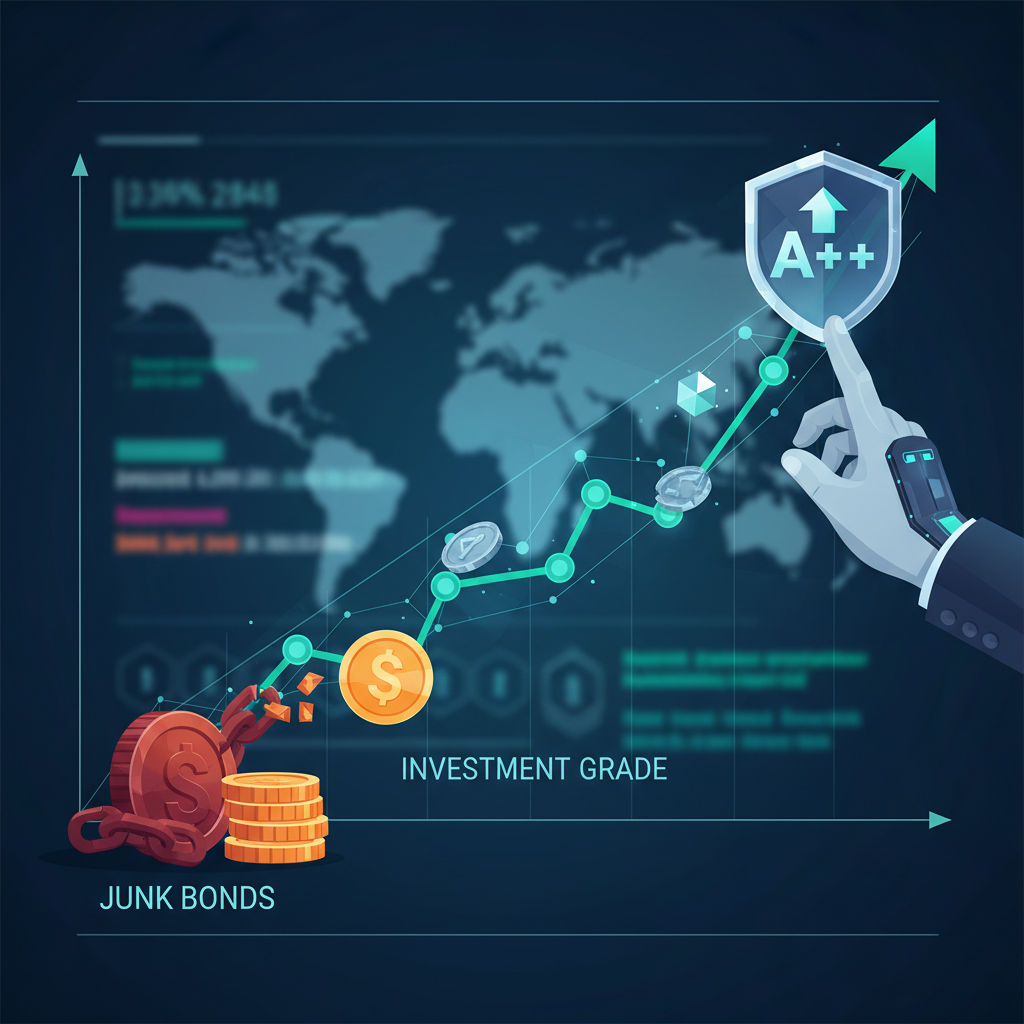
Understanding Credit Ratings: From Investment Grade to Junk Bonds
Credit ratings are an essential tool for investors and businesses alike. They provide an independent assessment of the creditworthiness of a borrower, whether it’s a government, corporation, or even an individual. In simple terms, a credit rating tells you how likely a borrower is to repay their debts on time and in full. This article will break down the world of credit ratings, from the coveted investment grade to the riskier junk bonds.
What are Credit Ratings and Why Do They Matter?
Credit ratings are assigned by credit rating agencies (CRAs). The most well-known agencies include Standard & Poor’s (S&P), Moody’s, and Fitch Ratings. These agencies analyze a borrower’s financial health, including their assets, liabilities, income, and expenses, as well as the overall economic environment. They then assign a rating that represents their opinion on the borrower’s ability to meet their financial obligations.
Why do these ratings matter? For investors, credit ratings are a key factor in making informed decisions. A higher credit rating typically means lower risk and therefore, often lower interest rates. Conversely, a lower credit rating indicates higher risk, which usually comes with higher interest rates to compensate investors for the increased possibility of default. For borrowers, a good credit rating can translate to lower borrowing costs, making it easier to finance projects and grow their businesses.
The Credit Rating Scale: From AAA to D
Credit rating agencies use different scales, but they all follow a similar pattern. Here’s a breakdown of the ratings assigned by S&P and Moody’s:
- AAA/Aaa: The highest rating, indicating an extremely strong capacity to meet financial commitments. This is the gold standard of creditworthiness.
- AA/Aa: A very strong capacity to meet financial commitments. These are still considered very safe investments.
- A: A strong capacity to meet financial commitments, but more susceptible to adverse economic conditions.
- BBB/Baa: An adequate capacity to meet financial commitments, but adverse economic conditions are more likely to weaken the borrower’s capacity. This is generally considered the lowest investment-grade rating.
- BB/Ba: Less vulnerable in the near-term but faces major ongoing uncertainties to adverse business, financial, and economic conditions. Considered non-investment grade.
- B: More vulnerable than the BB/Ba, but the obligor currently has the capacity to meet its financial commitment. Considered highly speculative.
- CCC/Caa: Currently vulnerable, and the obligor is dependent upon favorable business, financial, and economic conditions to meet its financial commitment.
- CC/Ca: Highly vulnerable.
- C: The obligor is currently highly vulnerable, and debt payment is likely to depend on a successful refinancing or reorganization.
- D: Payment default.
Ratings from AAA to BBB (or Aaa to Baa) are considered investment grade. These bonds are considered relatively safe and are often held by institutional investors such as pension funds and insurance companies. Ratings below BBB (or Baa) are considered non-investment grade, often referred to as “high yield” or junk bonds. These bonds carry a higher risk of default but also offer the potential for higher returns.
Investment Grade vs. Junk Bonds: A Deeper Dive
Investment Grade Bonds
Investment grade bonds are seen as safe harbors in the investment world. They are typically issued by well-established companies and governments with a proven track record of financial stability. These bonds are subject to stringent regulations and are often required holdings for certain types of institutional investors. The returns on investment grade bonds are generally lower than those of junk bonds, but the risk of losing your principal is also significantly lower. A solid credit rating also allows these entities to secure financing at much better terms.
Junk Bonds
Junk bonds, on the other hand, are a different ballgame. They are issued by companies that are perceived as having a higher risk of default. These companies may be startups, companies with a history of financial difficulties, or companies operating in volatile industries. To compensate for this higher risk, junk bonds offer higher yields than investment grade bonds. However, investors need to be prepared for the possibility of losing a significant portion, or even all, of their investment. While risky, junk bonds can offer significant returns if the issuer is able to improve its financial situation.
Factors Influencing Credit Ratings
Several factors can influence a borrower’s credit rating. These include:
- Financial Ratios: Profitability, debt levels, and cash flow are all carefully scrutinized.
- Industry Outlook: The overall health and stability of the borrower’s industry are considered.
- Management Quality: The competence and integrity of the borrower’s management team are assessed.
- Economic Conditions: The overall economic environment, including interest rates, inflation, and GDP growth, can impact a borrower’s ability to repay its debts.
- Geopolitical Risks: Political instability and other geopolitical events can also affect credit ratings, especially for governments.
The Role of Credit Rating Agencies
Credit rating agencies play a crucial role in the financial markets. They provide independent assessments of credit risk, which helps investors make informed decisions and allows capital to flow efficiently. However, it’s important to remember that credit ratings are not guarantees. They are opinions based on the information available at a particular point in time. Credit rating agencies have faced criticism in the past, particularly for their role in the 2008 financial crisis, when they were accused of assigning overly optimistic ratings to complex mortgage-backed securities. Since then, regulators have increased scrutiny of credit rating agencies and implemented measures to improve their transparency and accountability.
The Impact of Downgrades and Upgrades
A downgrade in a credit rating can have significant consequences for a borrower. It can lead to higher borrowing costs, reduced access to credit, and a decline in investor confidence. Companies often see their stock price drop after a downgrade. Conversely, an upgrade in a credit rating can have the opposite effect, leading to lower borrowing costs, increased access to credit, and a boost in investor confidence.
Using Credit Ratings in Your Investment Strategy
Credit ratings are a valuable tool for investors, but they should not be the only factor considered when making investment decisions. It’s important to conduct your own research and due diligence before investing in any bond, whether it’s investment grade or a junk bond.
Here are some tips for using credit ratings in your investment strategy:
- Understand the Ratings: Familiarize yourself with the different rating scales and what they mean.
- Diversify Your Portfolio: Don’t put all your eggs in one basket. Diversify your bond holdings across different credit ratings and sectors.
- Consider Your Risk Tolerance: If you’re risk-averse, stick to investment grade bonds. If you’re willing to take on more risk for the potential of higher returns, consider a small allocation to junk bonds.
- Stay Informed: Keep up-to-date on the latest news and developments that could affect credit ratings.
- Do Your Own Research: Don’t rely solely on credit ratings. Read company reports, analyze financial statements, and consult with a financial advisor.
The Future of Credit Ratings
The world of credit ratings is constantly evolving. New technologies and data sources are being used to improve the accuracy and timeliness of credit risk assessments. There is also a growing focus on incorporating environmental, social, and governance (ESG) factors into credit ratings. As the financial markets become more complex, the role of credit rating agencies will continue to be important in helping investors navigate the risks and opportunities.
Ultimately, understanding credit ratings is crucial for anyone involved in the financial markets. Whether you’re an individual investor, a business owner, or a government official, a solid grasp of credit risk can help you make more informed decisions and achieve your financial goals.
Actionable Advice and Call to Action
Now that you have a better understanding of credit ratings, here’s what you can do:
- Review your own credit report: Understanding your credit score will help you make better financial decisions.
- Research companies or governments before investing in their bonds. Don’t rely solely on credit ratings; understand the underlying fundamentals.
- Talk to a financial advisor: A qualified professional can help you develop an investment strategy that aligns with your risk tolerance and financial goals.
Ready to take the next step? Sign up for our free newsletter to receive regular updates on market trends, investment strategies, and more.