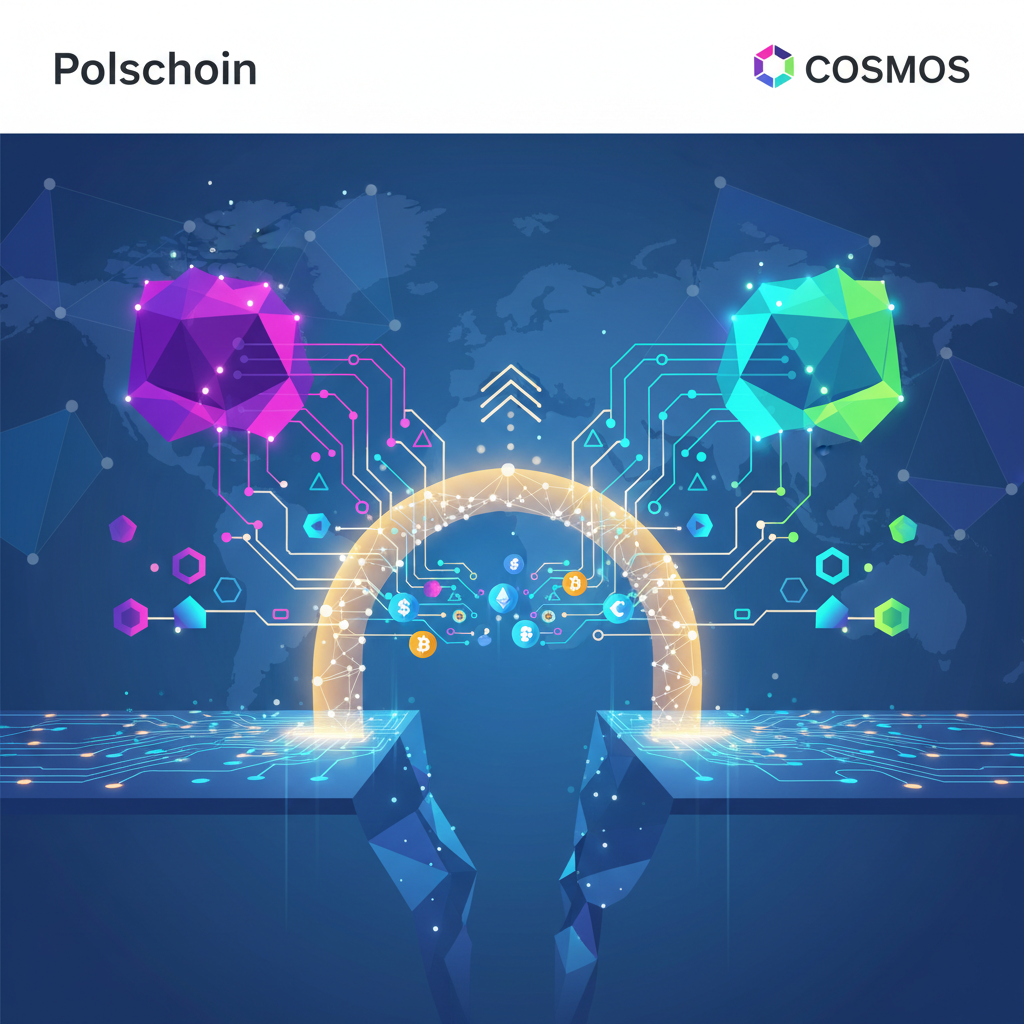
Crypto Interoperability: How Polkadot and Cosmos Bridge Blockchains
The blockchain world, while revolutionary, has long faced a challenge: a lack of seamless communication between different networks. Imagine a world where you can easily transfer assets and data between Bitcoin, Ethereum, and other blockchains without complex intermediaries. This is the promise of crypto interoperability, and two projects, Polkadot and Cosmos, are leading the charge in making this vision a reality.
Understanding the Interoperability Problem
Before diving into the solutions, it’s crucial to understand the problem. Blockchains, by their nature, are often isolated ecosystems. Each blockchain operates under its own set of rules, consensus mechanisms, and data structures. This isolation, while contributing to security, creates barriers to entry and limits the potential for innovation. Think of it like different countries each speaking their own language. Trading and collaboration become much harder without a common language or translators.
Without crypto interoperability, moving assets from one blockchain to another often requires centralized exchanges or complex wrapped token mechanisms. These solutions introduce counterparty risk and can be inefficient. The ideal scenario is a trustless and decentralized way to bridge these gaps.
Polkadot: Building a Multi-Chain Future
Polkadot is a heterogeneous multi-chain architecture that allows different blockchains (called “parachains”) to connect and communicate with each other through a central “relay chain.”
How Polkadot Works
The relay chain is the heart of Polkadot. It’s responsible for the network’s security and consensus. Parachains, on the other hand, are individual blockchains that can be customized for specific use cases. They connect to the relay chain and inherit its security. Key components of Polkadot’s architecture include:
- Relay Chain: The central chain that provides security and interoperability.
- Parachains: Independent blockchains connected to the relay chain.
- Parathreads: Similar to parachains but offer a pay-as-you-go model for occasional connectivity.
- Bridges: Allow Polkadot to connect with external blockchains like Bitcoin or Ethereum.
Polkadot achieves crypto interoperability through its cross-chain messaging protocol (XCMP). This allows parachains to send messages and transfer assets to each other securely and efficiently. The shared security model of the relay chain ensures that all connected parachains benefit from a robust and trustworthy foundation.
Benefits of Polkadot
- Scalability: By distributing transaction processing across multiple parachains, Polkadot can achieve higher throughput than single-chain blockchains.
- Customizability: Parachains can be designed with specific functionalities and governance models, catering to diverse needs.
- Interoperability: XCMP enables seamless communication and asset transfer between parachains.
- Shared Security: Parachains benefit from the security of the relay chain, reducing the risk of attacks.
Cosmos: The Internet of Blockchains
Cosmos takes a slightly different approach. It envisions a network of independent blockchains (called “zones”) that can communicate with each other through a standardized protocol called Inter-Blockchain Communication (IBC).
How Cosmos Works
Instead of a shared security model like Polkadot, Cosmos emphasizes sovereignty. Each zone in Cosmos is a fully independent blockchain with its own consensus mechanism and governance. The key to crypto interoperability in Cosmos is IBC, which provides a standardized way for these independent zones to exchange data and assets.
Key components of the Cosmos ecosystem include:
- Tendermint BFT: A Byzantine Fault Tolerant consensus engine that provides a secure and efficient foundation for building blockchains.
- Cosmos SDK: A modular framework for building custom blockchains.
- Inter-Blockchain Communication (IBC): The protocol that enables communication and asset transfer between zones.
- Hubs: Central blockchains that connect multiple zones, facilitating inter-chain communication. The Cosmos Hub is the first and most well-known hub.
When a zone wants to communicate with another zone, it sends a message through IBC. The message is relayed through the hub and then delivered to the destination zone. This system allows for a flexible and decentralized network of interconnected blockchains.
Benefits of Cosmos
- Sovereignty: Zones retain complete control over their own governance and security.
- Flexibility: The Cosmos SDK allows developers to build custom blockchains tailored to their specific needs.
- Interoperability: IBC enables communication and asset transfer between independent zones.
- Scalability: The modular architecture allows for horizontal scaling by adding more zones to the network.
Polkadot vs. Cosmos: Key Differences
While both Polkadot and Cosmos aim to solve the problem of crypto interoperability, they have some fundamental differences.
- Security Model: Polkadot uses a shared security model, where parachains inherit security from the relay chain. Cosmos uses a sovereign security model, where each zone is responsible for its own security.
- Governance: Polkadot has a more centralized governance structure, while Cosmos is more decentralized, with each zone having its own governance.
- Development Focus: Polkadot is focused on building a tightly integrated multi-chain network, while Cosmos is focused on creating a network of independent blockchains.
The choice between Polkadot and Cosmos often depends on the specific needs of the project. If shared security and a tightly integrated network are priorities, Polkadot might be a better choice. If sovereignty and flexibility are more important, Cosmos might be more suitable.
The Future of Crypto Interoperability
Crypto interoperability is still in its early stages, but the potential impact on the blockchain industry is enormous. As Polkadot and Cosmos continue to develop and mature, we can expect to see more and more use cases emerge. This includes:
- Decentralized Finance (DeFi): Interoperability can enable cross-chain DeFi applications, allowing users to access a wider range of financial services.
- Cross-Chain Asset Transfer: Seamlessly move assets between different blockchains without relying on centralized exchanges.
- Data Sharing: Securely share data between different blockchains for various applications, such as supply chain management or identity verification.
- Gaming and NFTs: Enable cross-chain gaming experiences and allow NFTs to be used across different platforms.
The success of crypto interoperability hinges on continued innovation, collaboration, and adoption. As more developers and projects embrace these technologies, the blockchain ecosystem will become more connected, efficient, and accessible.
Conclusion
Polkadot and Cosmos are two of the most promising projects in the crypto interoperability space. They offer different approaches to solving the same problem, and both have the potential to revolutionize the blockchain industry. As the blockchain ecosystem continues to evolve, interoperability will become increasingly important, and Polkadot and Cosmos are well-positioned to lead the way.
Ready to dive deeper into the world of crypto interoperability?
- Explore the Polkadot website to learn more about their technology and ecosystem.
- Visit the Cosmos website to discover how they’re building the Internet of Blockchains.
- Subscribe to our newsletter for the latest updates on blockchain technology and interoperability solutions!