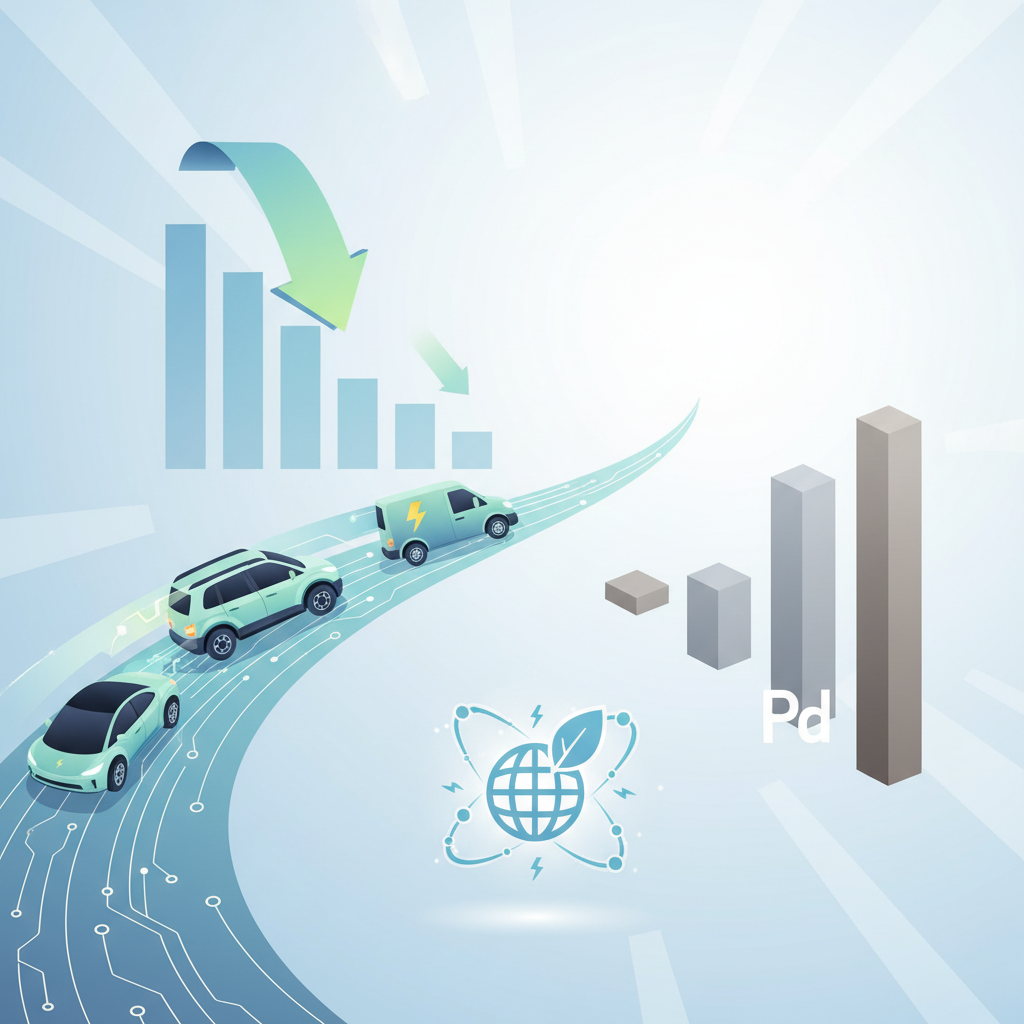
Commodities, Palladium Prices Drop Due to EV Substitution Effect
Palladium, a precious metal primarily used in catalytic converters for gasoline-powered vehicles, has seen a significant price drop recently. This decline is largely attributed to the increasing adoption of electric vehicles (EVs) and their substitution effect on commodities like palladium.
Understanding Palladium and Its Uses
Palladium is a rare and lustrous silvery-white metal discovered in 1803. Its primary use is in the automotive industry, specifically in catalytic converters. These devices are essential for reducing harmful emissions from gasoline engines. Catalytic converters use palladium, along with platinum and rhodium, to convert pollutants like hydrocarbons, carbon monoxide, and nitrogen oxides into less harmful substances like carbon dioxide, water, and nitrogen.
The demand for palladium has historically been strong due to stringent emissions regulations worldwide, particularly in Europe and China. However, the landscape is changing rapidly with the rise of EVs. Electric vehicles don’t require catalytic converters, significantly impacting the demand for palladium. This EV substitution effect is a key driver in the recent price correction.
The Rise of Electric Vehicles and the EV Substitution Effect
Electric vehicles are rapidly gaining popularity worldwide, driven by factors such as government incentives, growing environmental awareness, and advancements in battery technology. As EV sales increase, the demand for gasoline-powered vehicles decreases, leading to a reduction in the need for catalytic converters and, consequently, palladium. This is the core of the EV substitution effect.
How EVs Impact Palladium Demand
The EV substitution effect isn’t just a theoretical concept; it’s actively reshaping the commodities market. Consider these points:
- Reduced Catalytic Converter Demand: EVs have no exhaust emissions and therefore require no catalytic converters. Each EV sold effectively eliminates the need for a catalytic converter that would have used palladium.
- Consumer Shift: As more consumers opt for EVs, automakers adjust their production strategies. This shift reduces the overall production volume of gasoline vehicles, further dampening palladium demand.
- Policy Support: Many governments are actively promoting EV adoption through subsidies, tax breaks, and stricter emissions standards for traditional vehicles, accelerating the EV substitution effect.
Palladium Price Fluctuations
The price of palladium is susceptible to volatility due to its supply constraints, geopolitical factors, and changes in automotive industry trends. In recent years, the metal experienced significant price surges, driven by both strong demand from the automotive sector and supply disruptions caused by geopolitical tensions in major producing regions like Russia and South Africa. However, the increasing market share of EVs is now exerting downward pressure on palladium prices.
Recent Price Drops and Market Analysis
Market analysts point to the EV substitution effect as the primary reason for the recent decline in palladium prices. While other factors, such as global economic uncertainty, can play a role, the fundamental shift in automotive technology is the dominant force. Some analysts predict that palladium prices will continue to face downward pressure in the long term as EV adoption continues to accelerate.
Investors and industry observers are closely monitoring the palladium market, trying to assess the long-term implications of the EV substitution effect. The price fluctuations present both risks and opportunities for those involved in the precious metals market.
Alternative Materials and Technological Advancements
In addition to the EV substitution effect, there is also ongoing research and development focused on reducing or replacing palladium in catalytic converters. Automakers are exploring alternative materials and technologies to reduce their reliance on this expensive metal.
The Search for Alternatives
While palladium remains a crucial component in catalytic converters, the industry is actively seeking alternatives. Some potential solutions include:
- Platinum: Platinum is another precious metal used in catalytic converters, and it can be used as a partial substitute for palladium in some applications.
- Base Metals: Researchers are exploring the use of cheaper base metals as catalysts, although significant technological hurdles remain.
- Improved Catalytic Converter Design: Optimizing the design of catalytic converters can reduce the amount of palladium required.
These efforts, combined with the EV substitution effect, are contributing to a changing landscape for palladium demand.
The Future of Palladium
The long-term outlook for palladium is uncertain. While the metal will likely continue to be used in gasoline-powered vehicles for some time, the EV substitution effect is poised to become increasingly significant. The pace of EV adoption, technological advancements in catalytic converter design, and geopolitical factors will all play a role in shaping the future of palladium.
Key Takeaways for Investors and Industry Professionals
Here are some key considerations for those involved in the palladium market:
- Monitor EV Sales: Keep a close watch on global EV sales data to assess the strength of the EV substitution effect.
- Track Technological Developments: Stay informed about advancements in catalytic converter technology and the potential for alternative materials.
- Consider Geopolitical Risks: Be aware of potential supply disruptions in major palladium-producing regions.
- Diversify Your Portfolio: Don’t rely solely on palladium; consider diversifying your investments to mitigate risks.
Conclusion: Navigating the Changing Commodities Landscape
The commodities market is dynamic and ever-evolving. The EV substitution effect on palladium prices is a clear example of how technological innovation can disrupt established industries. Staying informed, adapting to change, and diversifying investments are crucial for success in this complex environment.
What are your thoughts on the future of palladium? Share your insights in the comments below! And don’t forget to subscribe to our newsletter for more in-depth analysis of commodity market trends!