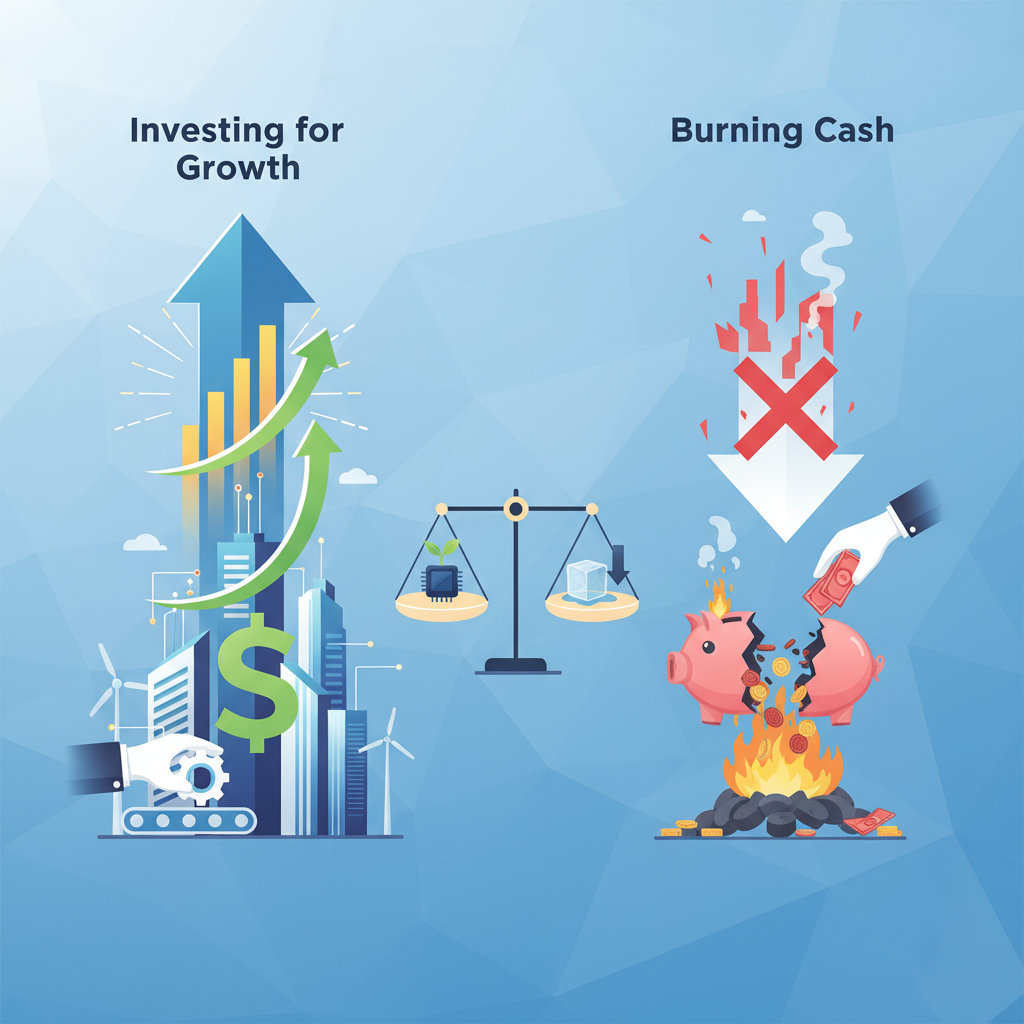
Capital Expenditure (CAPEX) Trends: Investing for Growth vs Burning Cash
Capital expenditure, or CAPEX, is a critical indicator of a company’s future prospects. It reflects decisions to invest in long-term assets, like property, plant, and equipment (PP&E). But how do you know if a company’s CAPEX spending is a sign of growth or a signal of struggling financials? Let’s take a closer look at current CAPEX trends and what they mean for investors.
Understanding CAPEX: More Than Just Spending Money
Simply put, capital expenditure refers to the funds a company uses to acquire, upgrade, and maintain physical assets. These assets are intended to provide benefits for more than one accounting period. Think of a manufacturing company buying a new piece of machinery, a tech firm investing in a data center, or a retailer opening a new store.
Why is CAPEX Important?
CAPEX is crucial for several reasons:
- Growth: Investments in new assets can expand a company’s capacity, allowing it to increase production and sales.
- Efficiency: Upgrading existing equipment or adopting new technologies can improve operational efficiency, reduce costs, and enhance profitability.
- Maintenance: Regularly maintaining and replacing assets ensures that a company can continue operating smoothly without significant disruptions.
- Competitive Advantage: Strategic CAPEX investments can provide a company with a competitive edge by enabling it to offer better products or services.
However, not all CAPEX is good CAPEX. Excessive or poorly planned spending can quickly lead to financial distress. That’s why it’s essential to analyze CAPEX trends carefully.
Current CAPEX Trends: A Mixed Bag
The global economic landscape has been turbulent in recent years, with uncertainties stemming from inflation, supply chain disruptions, and geopolitical tensions. These factors have significantly impacted companies’ CAPEX decisions. We’re seeing a few key trends emerge:
1. The Rise of Technology-Driven CAPEX
Companies across various sectors are increasingly investing in technology-related CAPEX. This includes:
- Digital Transformation: Implementing cloud computing, artificial intelligence (AI), and other digital technologies to improve efficiency and customer experience.
- Automation: Investing in robotics and automated systems to reduce labor costs and improve productivity.
- Cybersecurity: Strengthening cybersecurity infrastructure to protect against data breaches and cyberattacks.
These investments are crucial for staying competitive in an increasingly digital world. Companies that fail to embrace technological advancements risk falling behind their rivals.
2. Sustainability Initiatives Fueling CAPEX
Environmental, Social, and Governance (ESG) factors are becoming increasingly important to investors and consumers. As a result, many companies are allocating capital expenditure to sustainability-related projects, such as:
- Renewable Energy: Investing in solar, wind, and other renewable energy sources to reduce carbon emissions.
- Energy Efficiency: Implementing energy-efficient technologies and practices to lower energy consumption.
- Sustainable Materials: Using recycled or sustainably sourced materials in production processes.
These investments not only help companies reduce their environmental impact but also enhance their brand reputation and attract socially conscious investors.
3. Supply Chain Resilience a Key Driver
Recent supply chain disruptions have highlighted the importance of building more resilient supply chains. Companies are now investing in CAPEX to:
- Diversify Sourcing: Establishing multiple suppliers in different geographic locations to reduce reliance on a single source.
- Nearshoring and Reshoring: Bringing production closer to home to shorten supply chains and reduce transportation costs.
- Inventory Management: Improving inventory management systems to better anticipate demand and avoid stockouts.
These investments help companies mitigate risks and ensure business continuity in the face of unexpected disruptions.
4. A Cautious Approach in Traditional Industries
While technology and sustainability-related CAPEX are on the rise, many traditional industries, such as manufacturing and energy, are taking a more cautious approach. Factors contributing to this cautiousness include:
- Economic Uncertainty: Concerns about a potential recession or economic slowdown are leading companies to delay or scale back investment plans.
- Commodity Price Volatility: Fluctuations in commodity prices, particularly oil and gas, are making it difficult for energy companies to justify large-scale investments.
- Regulatory Uncertainty: Changing regulations and policies are creating uncertainty for businesses, making it harder to make long-term investment decisions.
This cautious approach reflects the need for companies to carefully manage their resources in an uncertain environment. Some companies may be tempted to cut capital expenditure drastically to preserve cash, but this could be detrimental in the long run if it means neglecting necessary maintenance or missing out on strategic opportunities.
Investing for Growth vs. Burning Cash: How to Tell the Difference
Analyzing a company’s CAPEX spending is essential, but it’s equally important to understand the context behind the investments. Here are some key factors to consider:
1. Analyze the CAPEX-to-Revenue Ratio
Compare a company’s CAPEX spending to its revenue. A high CAPEX-to-revenue ratio could indicate that the company is investing heavily in growth, but it could also be a sign that it’s struggling to generate revenue from its existing assets. Compare this ratio to industry averages and the company’s historical performance.
2. Look at the Type of CAPEX
Is the company investing in new assets (expansion CAPEX) or simply maintaining existing ones (maintenance CAPEX)? Expansion CAPEX is generally a more positive sign, as it indicates that the company is confident in its ability to grow. However, neglecting maintenance CAPEX can lead to operational problems and higher costs in the long run.
3. Assess the Return on Investment (ROI)
Ideally, CAPEX investments should generate a positive return on investment. However, it can be difficult to assess the ROI of CAPEX investments in the short term. Look for evidence that the company is carefully evaluating its investment decisions and tracking the performance of its assets.
4. Consider the Company’s Financial Health
A company with a strong balance sheet and healthy cash flow is better positioned to make CAPEX investments than one that is struggling financially. Be wary of companies that are taking on excessive debt to fund their CAPEX spending.
5. Read Management Commentary
Pay close attention to what company management says about its CAPEX plans in earnings calls and investor presentations. Are they clearly articulating the rationale behind their investments and providing updates on their progress? Transparent communication is a good sign.
The Bottom Line: CAPEX as a Window into the Future
Capital expenditure is a critical indicator of a company’s long-term prospects. By carefully analyzing CAPEX trends and understanding the context behind the investments, investors can gain valuable insights into a company’s growth potential and financial health. Don’t just look at the numbers; consider the strategic rationale and management’s vision for the future.
Take Action Now
Ready to dive deeper into analyzing company financials? Here are a few steps you can take:
- Research: Pick a company in an industry you’re interested in and examine its recent financial reports, paying close attention to its CAPEX spending.
- Compare: Compare the company’s CAPEX trends to those of its competitors. Are they investing more or less in key areas?
- Consult: If you’re unsure about how to interpret CAPEX data, consider consulting with a financial advisor.
Understanding CAPEX is an essential skill for any investor. By mastering this concept, you can make more informed decisions and increase your chances of long-term success.