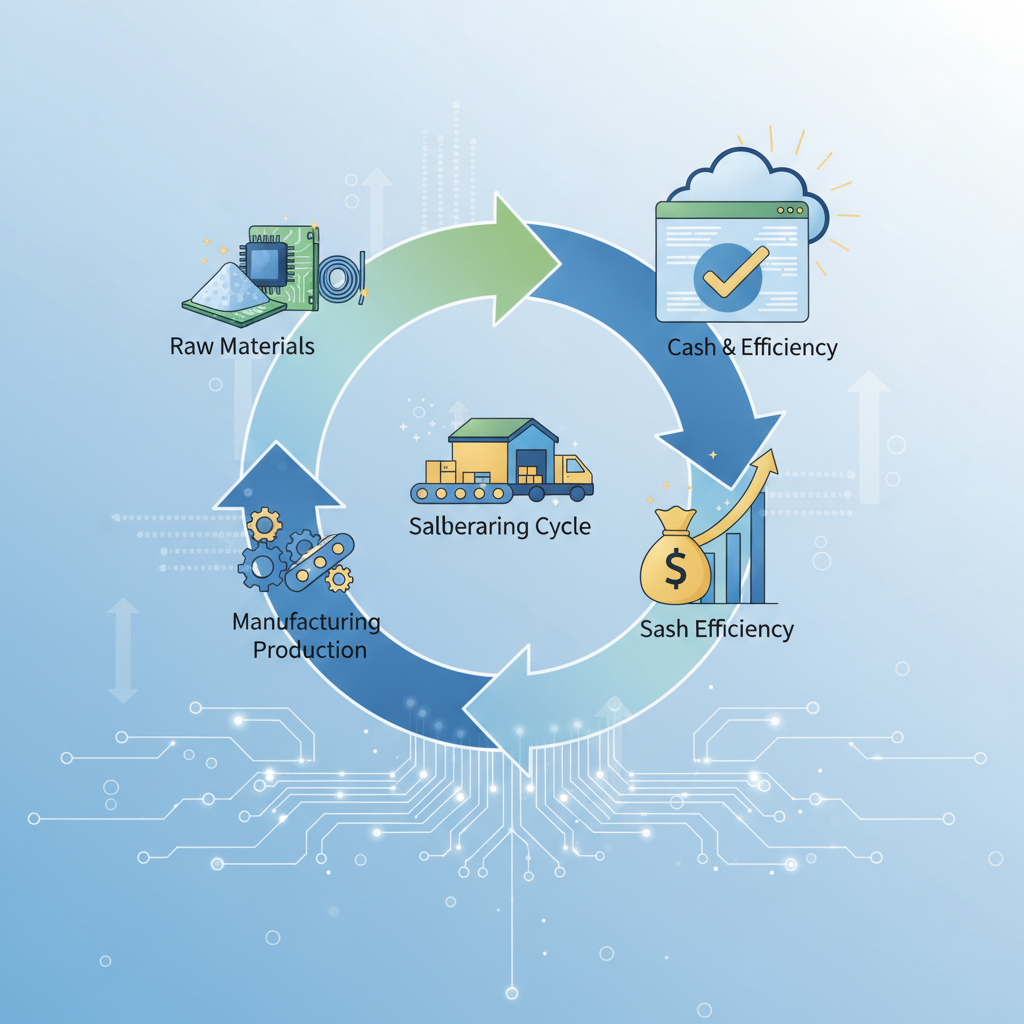
Analyzing Operating Cycle: Efficiency from Raw Material to Cash
In today’s dynamic business landscape, understanding and optimizing the **operating cycle** is critical for financial health. The operating cycle, in simple terms, is the time it takes for a company to convert its raw materials into cash from sales. It’s a key indicator of how efficiently a company manages its working capital.
Understanding the Components of the Operating Cycle
The operating cycle is composed of two main parts: the inventory period and the accounts receivable period. Let’s break down each element:
Inventory Period: From Raw Materials to Finished Goods
The inventory period is the time it takes a company to acquire raw materials, manufacture them into finished goods, and then sell those goods. A shorter inventory period generally indicates better efficiency. Factors influencing this period include:
- **Efficient Production Processes:** Streamlined manufacturing minimizes the time raw materials spend in production.
- **Effective Inventory Management:** Keeping the right amount of inventory on hand – not too much, which ties up capital, and not too little, which risks stockouts. Techniques like Just-in-Time (JIT) inventory can be beneficial.
- **Accurate Demand Forecasting:** Predicting customer demand helps businesses avoid overstocking or understocking.
Accounts Receivable Period: From Sale to Cash Collection
The accounts receivable period is the time it takes a company to collect payment from its customers after a sale on credit. A shorter accounts receivable period is desirable. Factors influencing this period include:
- **Credit Policies:** Clearly defined credit terms encourage prompt payment.
- **Effective Collection Procedures:** Regularly following up on outstanding invoices and offering incentives for early payment can speed up cash collection.
- **Customer Creditworthiness:** Assessing the creditworthiness of customers before extending credit reduces the risk of bad debts and delays in payment.
Why is Analyzing the Operating Cycle Important?
Analyzing the **operating cycle** provides valuable insights into a company’s financial performance and operational efficiency. Here’s why it’s important:
Improved Cash Flow Management
A well-managed **operating cycle** leads to improved cash flow. By shortening the time it takes to convert raw materials into cash, companies can free up capital for other investments, such as research and development or expansion.
Enhanced Profitability
Efficiency in the **operating cycle** directly impacts profitability. Faster inventory turnover reduces storage costs and the risk of obsolescence. Quicker cash collection from sales reduces the need for short-term borrowing to cover operating expenses.
Benchmarking Against Competitors
Comparing a company’s **operating cycle** to that of its competitors provides valuable benchmarking data. If a company’s cycle is significantly longer, it signals a need to examine its processes and identify areas for improvement.
Attracting Investors
Investors often scrutinize a company’s efficiency metrics, including the **operating cycle**. A company with a shorter, well-managed cycle is generally viewed as a more attractive investment due to its strong financial health and operational effectiveness.
Strategies for Optimizing the Operating Cycle
Several strategies can be employed to optimize the **operating cycle**:
Improve Inventory Management
Implementing inventory management techniques like Just-in-Time (JIT) inventory can significantly reduce the inventory period. JIT involves receiving raw materials only when they are needed in the production process, minimizing storage costs and waste.
Streamline Production Processes
Identifying and eliminating bottlenecks in the production process can shorten the time it takes to manufacture finished goods. This might involve investing in new equipment, improving workflow layouts, or providing additional training to employees.
Enhance Credit and Collection Policies
Reviewing and updating credit and collection policies can improve the accounts receivable period. Offering early payment discounts, implementing stricter credit checks, and using automated invoicing systems can encourage prompt payment.
Negotiate Better Terms with Suppliers
Negotiating extended payment terms with suppliers can provide additional time to convert inventory into cash before having to pay for the raw materials. This can improve cash flow and reduce the need for short-term borrowing.
Invest in Technology
Investing in technology, such as Enterprise Resource Planning (ERP) systems, can provide real-time visibility into inventory levels, production processes, and accounts receivable. This enables businesses to make data-driven decisions and optimize their **operating cycle**.
The Operating Cycle in Different Industries
The length of the **operating cycle** can vary significantly across different industries. For example, a grocery store typically has a shorter cycle due to the rapid turnover of perishable goods. In contrast, a construction company may have a much longer cycle due to the lengthy duration of construction projects and the time it takes to collect payments from clients.
Understanding industry-specific benchmarks is crucial for accurately assessing a company’s efficiency. What’s considered a good **operating cycle** in one industry might be considered subpar in another.
Real-World Examples
Let’s consider two contrasting examples:
- **Grocery Retailer:** A large grocery chain focuses on minimizing its inventory period through efficient supply chain management and sophisticated demand forecasting. They also offer various payment options and incentives to encourage quick payment from customers, resulting in a short **operating cycle** and strong cash flow.
- **Aerospace Manufacturer:** An aerospace manufacturer deals with long lead times for raw materials and complex production processes. They also face extended payment terms from their clients, often government agencies or large airlines. As a result, their **operating cycle** is significantly longer, requiring careful financial planning and management.
These examples highlight how industry-specific factors can influence the **operating cycle** and the strategies companies use to manage it.
Conclusion: A Continuous Improvement Process
Optimizing the **operating cycle** is not a one-time event but a continuous improvement process. Companies need to regularly monitor their key performance indicators (KPIs), identify areas for improvement, and implement strategies to enhance efficiency. By focusing on streamlining their processes and improving their working capital management, businesses can achieve greater profitability and financial stability.
Ready to take control of your business’s financial efficiency? Start by analyzing your current **operating cycle**. Identify the bottlenecks and areas where you can improve. Then, implement the strategies discussed in this article to optimize your **operating cycle** and unlock your business’s full potential. Don’t wait, start improving your cash flow today!